
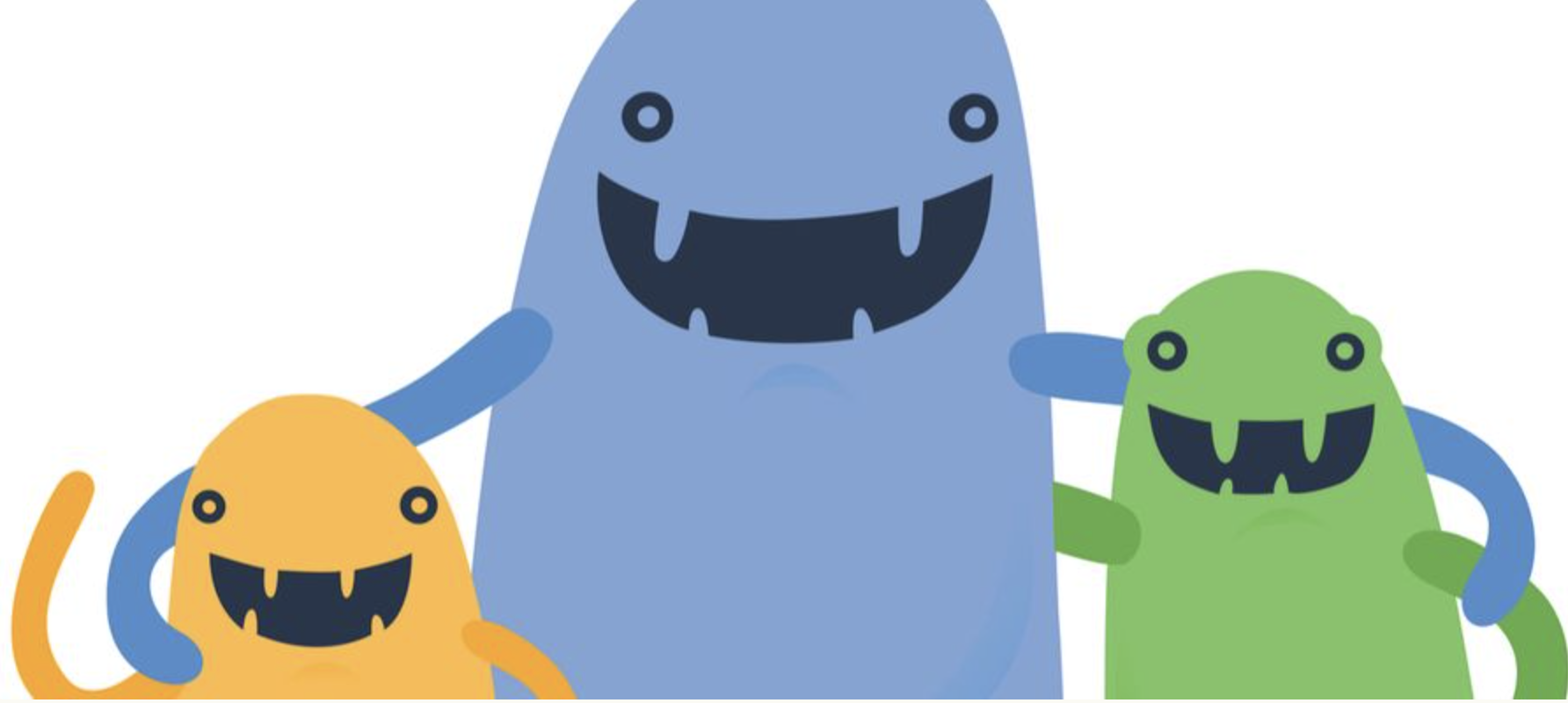
So cute! Or are they?
There are four words most of us love to hear:
“I need your advice.”
They’re flattering. They’re validating. They’re also where the trouble begins.
Before someone has even finished the sentence, your brain is already working on your answer.
Giving advice feels generous, useful, loving.
And sometimes it is. But often, something else is happening …
I call it your Advice Monster.
The Advice Monster isn’t a character flaw. It’s part of being human. All of us have at least one.
The challenge is that it doesn’t always know when to stay quiet.
Maybe you’ve noticed it:
Your kid brings you a problem, and you jump straight into solution mode to save them from themselves …
Your team is flailing, and you try to give your boss tips on how to manage better …
You and your spouse are moving at different paces, and your suggestions quickly become an argument …
Your friend’s stuckness is uncomfortable for you, so you try to speed things up by taking control …
The pressure is on at work, and jumping in feels faster than letting others figure it out …
The intention is almost always good. But the impact, unfortunately, isn’t.
Receiving advice
On the receiving end, someone else’s Advice Monster tells you, over and over, that you can’t figure this out yourself.
This slowly chips away at confidence, capability, and the belief that you’re able to solve hard problems.
Giving advice
When your own Advice Monster takes charge, you’ve given yourself the job of having the answers.
Of rescuing. Of fixing. Of carrying more than you need to.
That’s exhausting. And it leaves very little room for other people to surprise you.
But there’s another cost …
Every time we rush to give advice, there’s a hidden assumption lurking underneath.
“I know better than you do.”
Even when we don’t believe that consciously, that’s the signal advice can send.
That’s worth noticing and asking yourself: is that the message I want to be giving?
Taming your Advice Monster
The alternative isn’t to stop helping people. It’s to become a little more coach-like and to stay curious a little longer.
To trust that the other person might be more capable than your Advice Monster wants you to believe.
And if you’re wondering why this pattern keeps showing up, there’s more to uncover.
Because your Advice Monster doesn’t just have one face. It has three.