
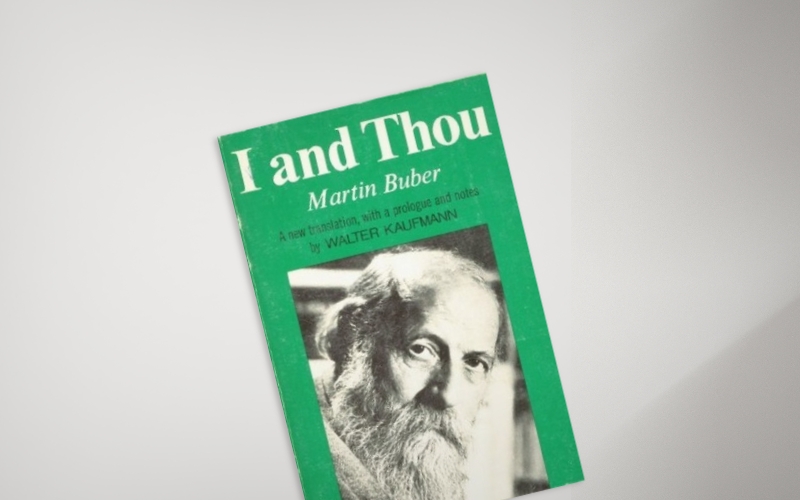
The I-Thou relationship of coaching
Encouraging you to get it wrong? That sounds … well, what does it sound like to you?
Dangerous? Liberating? Confusing? Career-limiting? All of the above?
In the new special hardback illustrated edition of The Coaching Habit (coming out on March 24, but you can get it early here), there’s a new chapter about the being of coaching.
It’s the most profound expansion of my thinking about the power of coaching over the last decade, or really 15 years, since I started teaching this work in earnest.
Beyond the understood power of coaching — great questions that provoke insight and action and solve challenges — the deep gift is to help people feel seen, heard and encouraged.
When you’re coaching someone, formally or informally, that happens when you’re really with them, fully present to them.
The much-quoted-by-me Martin Buber calls this the I-Thou relationship.
It’s when you’re not only delighting in the “full catastrophe” of who that person is, but, in a wide-sweeping way, helping them figure out how they’re of best use.
It happens less when you’re bound up in your own process … stuck in your own head, busy figuring out the next question, trying hard to manoeuvre them over some finish line you’ve conjured up.
In the above scenario, you’re not with them … you’re with you, and this is now an I-It relationship.
Even though you have the best of intentions, now in a slippery way, you’re figuring out how to use them, how to run them through your design.
What’s helped me become more masterful as a coach is to hold my own process lightly, and separate from me rather than part of me.
The foundation for this stance is two-fold.
First, curiosity. “Huh, how about this?” Second, co-creating. “How about we …”
I’ve got some framing language I use that builds in a lightness, a sense of collaboration, and a “this might fail” to any coaching or problem-solving invitation. (And I encourage you to try any of these too.)
Let’s give this a shot. It might not work …
Here’s a question, which may or may not land …
Let’s try out something here …
I may have this wrong, but …
When we’re determined to be right, we’re determined to maintain what Ed Schein would call the “one-up” position in the relationship.
It doesn’t matter if we’re sure this is what would be best for that other person. In fact, that certainty is part of where we get entangled. You know better than they do, right?
Hold it lightly. Don’t worry if you don’t get it exactly right.
That may, in fact, be a wonderful gift to the person you’re coaching.