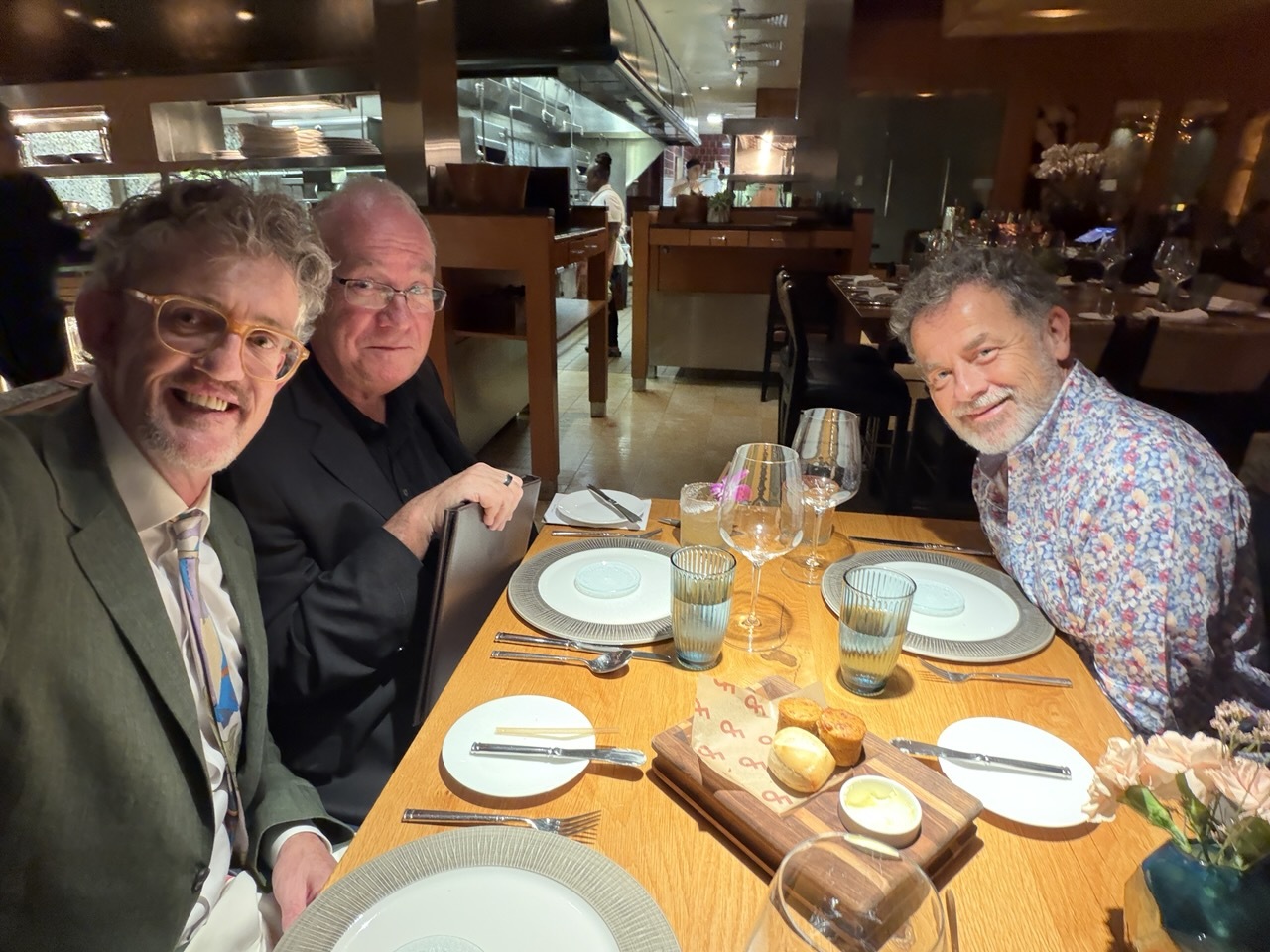
Breaking bread with my friends, Jim and Christian.
In a few days, I’ll be welcoming people here in Toronto for Stay Curious LIVE.
When we started designing this two-day event, we didn’t start with the content. We asked ourselves this:
What experience are we trying to build, and how do we create structure around it so people have an amazing time?
That question comes from one of my favourite books, Priya Parker’s The Art of Gathering.
If there’s a single message in it, it’s this:
If you’re going to host, it’s not enough to invite people to show up and then let them go free range.
You’ve brought them together, so help them. Help them be the best version of themselves, connect with others, and delight in the moment.
Don’t leave people to figure it out
Many hosts hesitate here. It feels heavy-handed, like treating people as children. They think: they’re adults, so they’ll figure it out.
And they will figure something out. But it won’t be as good as what you could have figured out for them.
Now, I’m not saying you need a run sheet that moves people through a new experience every three minutes. But it’s worth asking yourself a few questions:
What experience do I want people to have?
What do I want to be different by the end?
Where might people find it hard, or opt out, or get overlooked?
How do I tame the loud people a little, and amplify the quiet people a little (without making them feel uncomfortable)?
At most gatherings, whether it’s a dinner party, a backyard barbecue or a conference, people know somewhere between none and maybe 20% of the room.
A good host builds bridges between them, so people don’t just meet; they feel seen, heard and encouraged.
Two better ways to begin
Introduction questions are one of the easiest ways to do that. I’ve got two favourites …
The first is a pair: What are you known for? And what are you up to?
People sometimes get anxious about the first half. (“I’m not known for anything!”) So make it human. You’re not looking for their resume. It’s what their best friends and family would say about them.
“What are you up to?” invites a conversation about what’s exciting and what adventure is beckoning.
The second is simpler: What are two essential things about you?
People always ask what I mean by essential. I say, “I know. What do you think?”
They figure it out. I’ve answered it myself dozens of times, never the same way twice.
The final twist
Whoever answers first sets the depth for everyone else. Go deep early, and others follow. Start glib, and everyone stays shallow.
So if you’re hosting anything soon, find someone who’ll go deep first. Or better yet, go first yourself.