
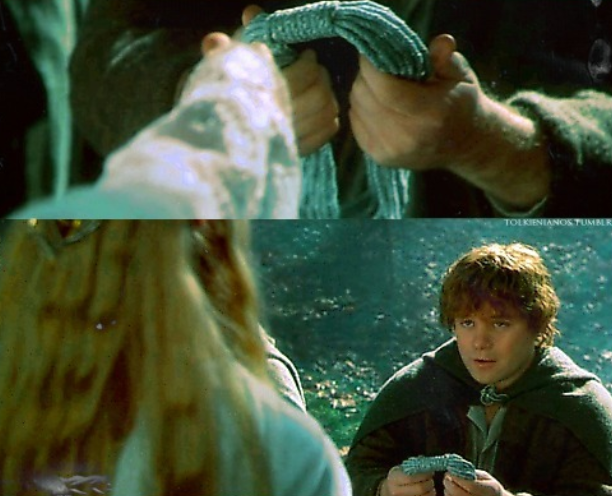
The gift of … accountability?
For The Year of The Coaching Habit, I’m revealing exactly what’s at play in a couple of days, at Thursday’s webinar.
One of the things that’s going on is that I’m writing four minibooks to complement and supplement The Coaching Habit, short deep-dives that add to your capacity to stay curious, and to bring out the best in someone.
The first is “The Slippery Weasel’s Guide to Kind Accountability” (yes, I’m the slippery weasel). We’re printing it even as we speak. It’s fun and it’s useful, our dual intention for the year. Yeah!
Here’s one small piece from it, one of the three paradoxes of accountability.
2. Wield the Gossamer Lasso AND the Flamethrower
Let me suggest two tools to hold yourself, and others, accountable. They’re mostly metaphorical, but I’m not ruling out you getting your hands on actual physical versions of these.
I think most people use the one, when they should use the other. (And vice versa.)
In Tolkien’s The Lord of the Rings, loyal Samwise Gamgee gets a gift of elven rope from their queen Galadriel. It’s both stronger and lighter than usual rope, and a knot can be undone with a single tug.
This gentle touch, the gossamer lasso, is how I think accountability should look and feel most of the time.
It’s not out of a desire to be “soft” or a fear of confrontation. It’s out of the realization that blunter, more punitive accountability creates resistance, shame, and resentment, even if it occasionally pushes a person across the line.
The gossamer lasso is also more likely to encourage agency and capacity, so people (yourself included) have more ability to get more done by themselves, now and in the future.
There’s nothing better, when you’re in a role of encouragement and support, of becoming redundant because they’re now internally resourced.
(There’s more on the challenge of being “not needed” later on in the minibook.)
The gossamer lasso makes accountability feel like support, not punishment. Often it’s simply the case of asking what support they need and how you can be most encouraging for them.
It can be coming back to the task at hand, bringing it into the light, and asking how that’s going.
It might be helping them build a structure that might not involve you at all, but that keeps them moving forward and not becalmed. There’s curiosity about the work, and love for them.
But flamethrowers have their place, too. That’s a time when you want to come in hard and strong to drive home the point.
This is the place for fierce love, the place for Kim Scott’s “radical candor.”
Pointing out patterns that are repeating.
Increasing the stakes.
Suggesting that it’s madness to keep doing the same things, expecting different results.
I know that I’ve used these in the wrong places at the wrong time. I’ve been too flamethrower-y at the start, and left scorched earth when it wasn’t necessary.
And there have been times when being fierce and holding the line has been what’s required, and I’ve shrunk from that more difficult conversation.
Use the lasso often, and the flamethrower rarely.
Use them in the service of the person who’s doing the work, and not simply to wield the tools.
Use both of them kindly and with love.