
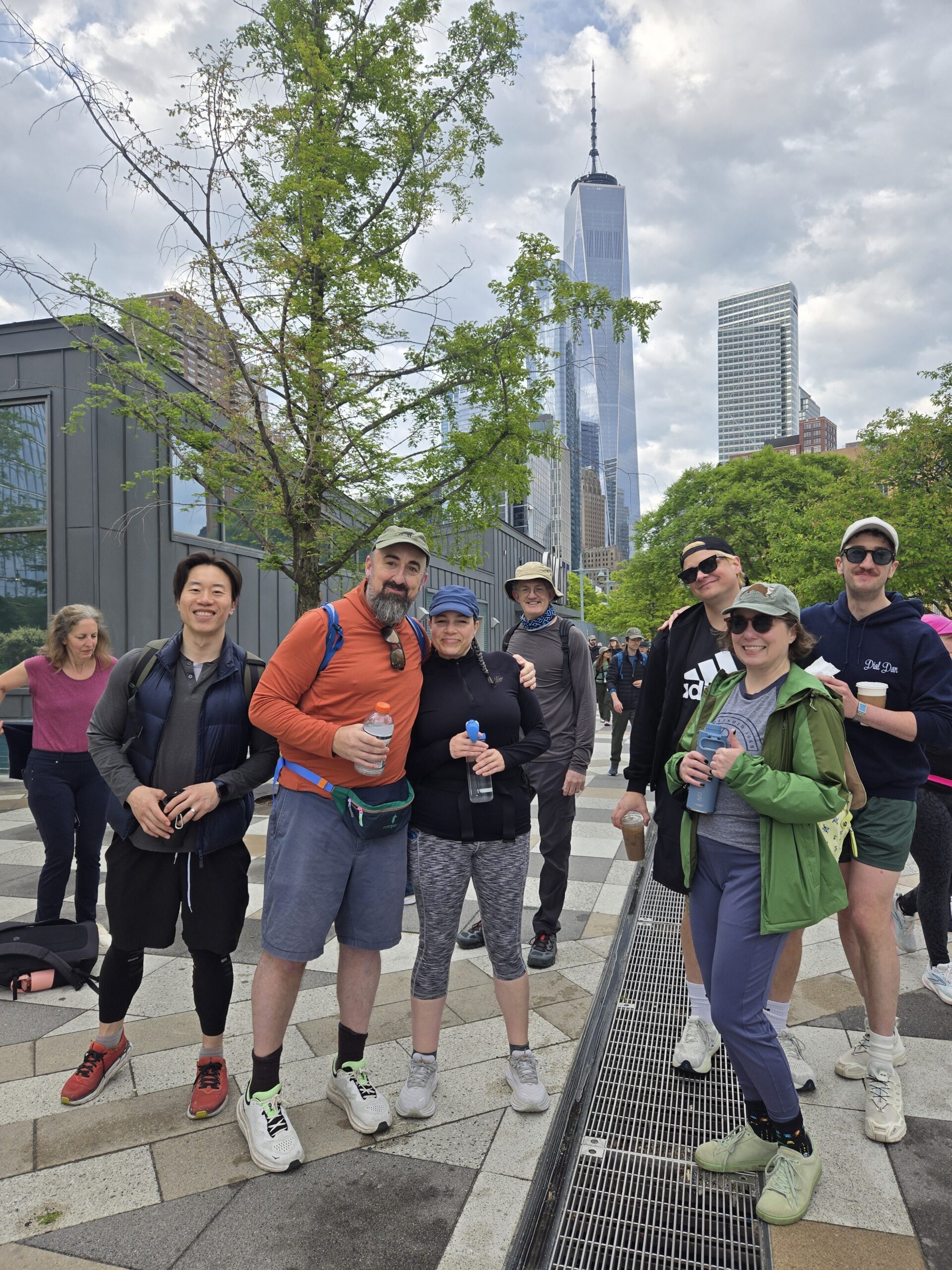
The Great Saunter group. I’m in the back, smiling through the blisters.
Earlier this month, I headed to New York for the Great Saunter.
And by saunter, I mean 32 miles (or 50 kilometres) around the boundary of Manhattan in a single day.
It was 12 hours (maybe 14, but felt like 24).
I love the name because it’s not a hike or jaunt or sprint. It was The Great Saunter. There’s a generosity in that word, an invitation to go gently and notice things and be in good company without rushing.
Which got me thinking about pace.
Walking with someone, metaphorically
My niece Tilly has been here interning with me for the past month or so. She’s smart, capable, in her early twenties, and she’s done plenty of work before.
But this kind of work — thought leadership and strategy and marketing plans — is new to her. So she’s a slow walker, metaphorically speaking.
And I’ve come to realize that I have an itch to be in front.
I can dress it up nicely as leading and showing the way because I’m the experienced one who knows the route.
All of that sounds good, and some of it might even be true … but does walking faster than the person I’m with get either of us to our destination faster? Typically no.
When I catch myself trying to speed things up, I try to ease back and match her pace.
I try to walk beside her, not ahead of her.
Because the moment you are a step in front, you’ve stopped being a companion and started being someone whose back they’re staring at.
Side by side is a different relationship
Side by side, you’re looking at the same things, pointing at the same things, figuring it out together.
You can still be the more experienced walker. You just aren’t lording it over them.
This is true of the niece, of the friend, and of the person you manage.
It’s true, I suspect, of most of the people you care about.
Because side by side, you both go further.
And if you want to know how to recover from walking 50km in 12 hours, here’s how I do it.